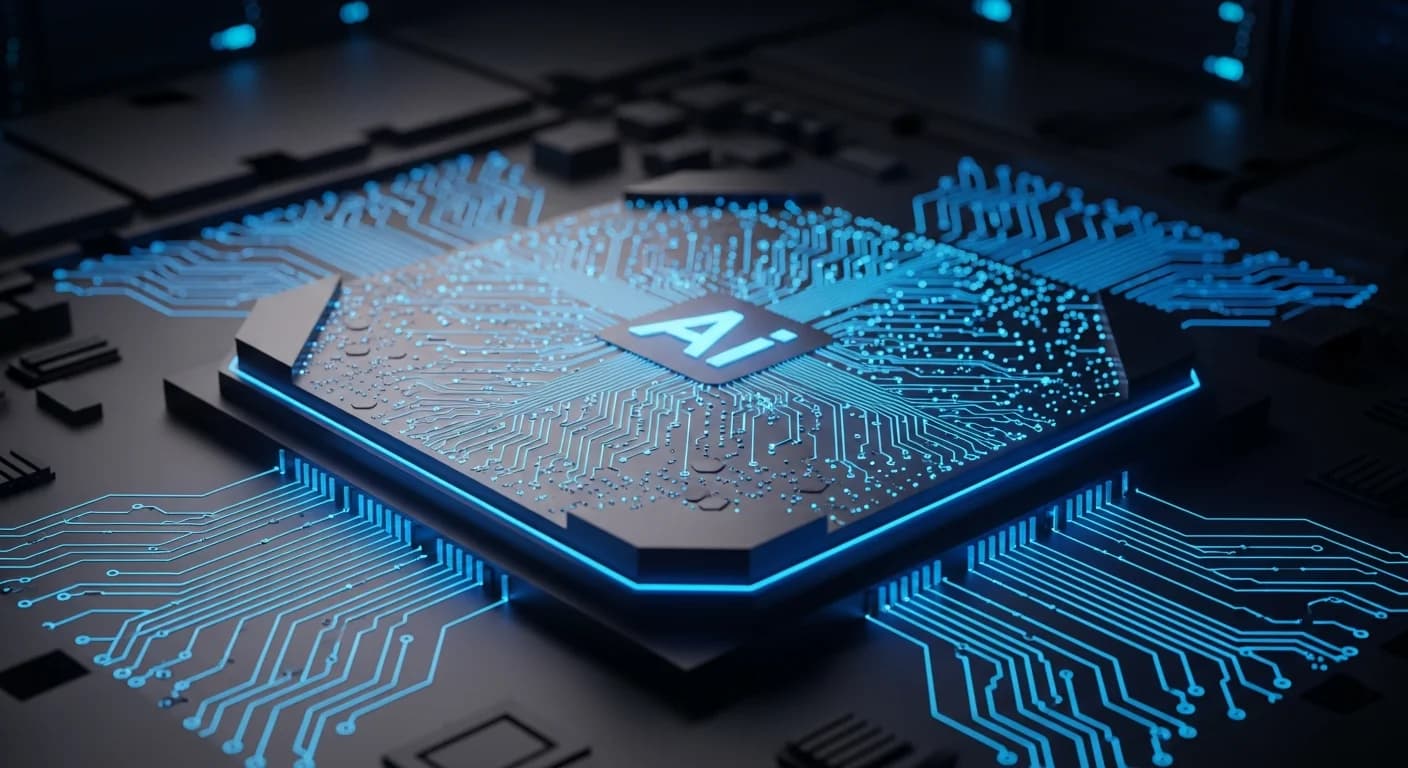
Meta has begun deploying its custom MTIA (Meta Training and Inference Accelerator) chips across its global data center fleet, marking the most significant in-house silicon push by any hyperscaler to date — and the clearest signal yet that Nvidia's grip on AI inference hardware is loosening.
Four Chips, Six-Month Cadence
The MTIA family now includes four planned generations: MTIA 300, 400, 450, and 500. Meta is executing on a roughly six-month release cadence — an aggressive schedule that mirrors the rapid iteration cycles seen in AI model development.
MTIA 300, the first production chip, deployed across Meta data centers in early March 2026. MTIA 400 has completed testing and is expected to enter production deployment imminently.
The performance jump between generations is substantial. MTIA 400 delivers 400% higher FP8 FLOPS than MTIA 300, with 51% higher HBM bandwidth. Its specifications — 288GB of HBM, 1,200W TDP, and 72-accelerator scale-up domains — put it in the same conversation as Nvidia's data center offerings for inference workloads.
The Economics of Scale
Meta's motivation is straightforward: cost. The company serves AI-powered features — feed ranking, recommendation systems, content moderation, and now generative AI through Meta AI — to over 3 billion monthly active users. At that scale, even small efficiency gains per chip translate into billions of dollars in annual savings.
Meta claims the MTIA 400 is the first chip in the family to offer "genuine cost savings alongside performance competitive with leading commercial products." Independent verification of those claims is pending, but the direction is clear: Meta is building chips specifically optimized for its own inference workloads, rather than relying on general-purpose GPUs designed for a broader market.
Not Cutting Nvidia Off — Yet
The MTIA program does not mean Meta is abandoning external GPU suppliers. The company recently signed a massive $60 billion partnership with AMD and continues to purchase Nvidia hardware, particularly for training large foundation models like Llama.
The split is strategic: MTIA handles inference (running models at production scale), while Nvidia and AMD hardware handles training (building the models in the first place). As inference increasingly dominates total AI compute spend — some estimates put it at 60-70% of workload — the economic case for custom inference silicon grows stronger.
The Hyperscaler Silicon Race
Meta joins Google (which has deployed TPUs since 2016), Amazon (with its Trainium and Inferentia chips), and Microsoft (with its Maia accelerator) in the race to build custom AI silicon. The common thread: at hyperscaler volumes, the margins on commercial GPU hardware represent billions in potential savings.
For Nvidia, the trend is concerning but not existential. Training workloads still require the kind of general-purpose GPU performance where Nvidia dominates. But as the AI industry matures and inference costs become the primary budget line item, the era of Nvidia-only data centers is clearly ending.
Meta plans to make MTIA 450 and 500 available through 2027, with each generation targeting broader workload coverage beyond pure inference.