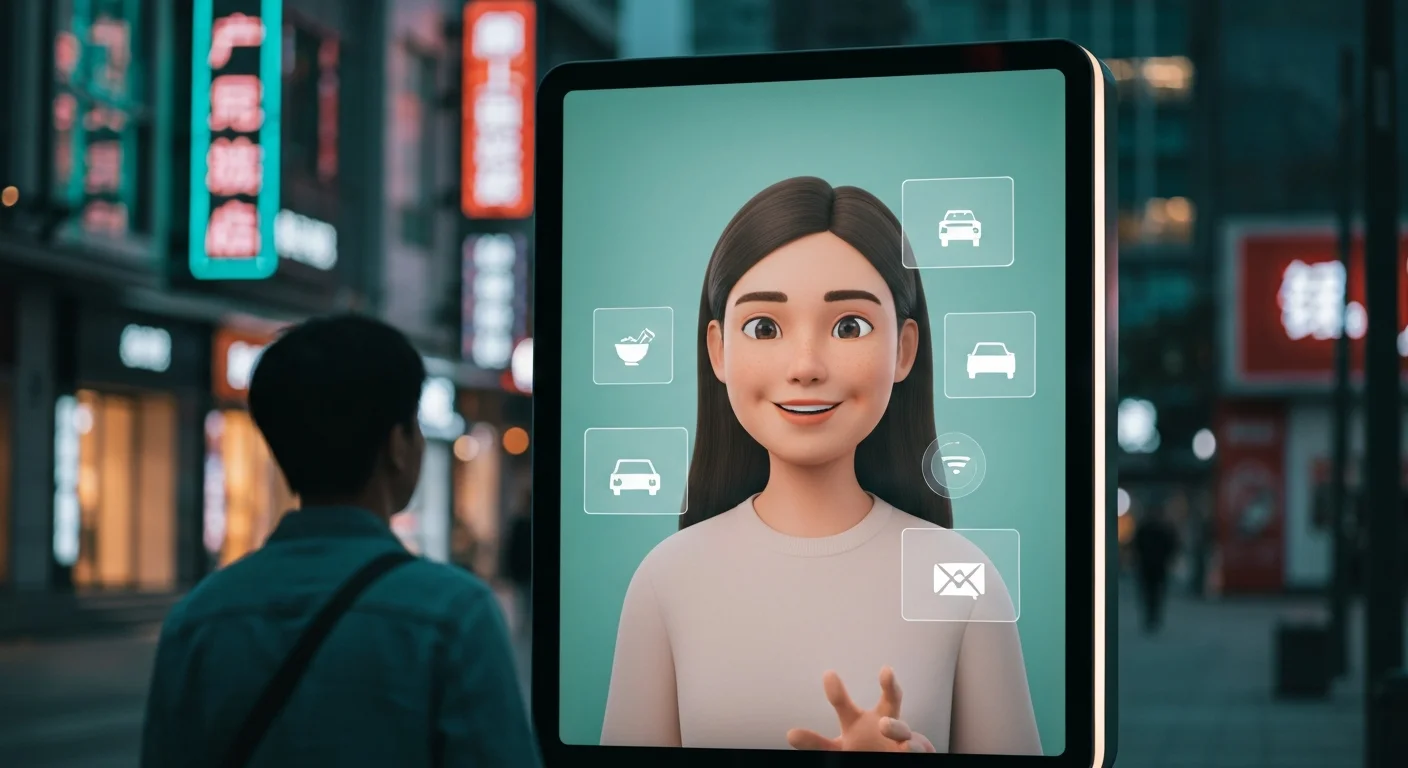
Alibaba officially unveiled Qwen Xiaojiuwo today, an ecosystem-level AI digital-human assistant that the company is positioning as a gateway between its Qwen large language models and the real world of consumer transactions. The launch, teased two days earlier with a cryptic "See you on April 22, hello world" poster featuring a dimpled female avatar, marks one of the most visible attempts by a Chinese tech giant to push generative AI past chat interfaces and into embodied, action-taking systems.
What Qwen Xiaojiuwo does
According to Alibaba, users can interact with Qwen Xiaojiuwo through simple spoken or typed conversation to complete tasks such as ordering food, buying tickets, and hailing rides. Rather than shipping as a standalone chatbot, the assistant is being framed as an "ecosystem-level" figure that Alibaba plans to weave across its various consumer applications over time.
That framing matters. Alibaba runs a sprawling set of services — from Taobao and Tmall in commerce to Ele.me in food delivery and Fliggy in travel — and historically each has been its own walled experience. Qwen Xiaojiuwo is pitched as a unifying conversational front end sitting above those services, turning them into executable actions a single digital persona can orchestrate.
The embodied-AI signal in the trademarks
The more telling detail sits in the trademark paperwork. On March 10, 2026, Alibaba (China) Co., Ltd. filed four trademark applications for "Qianwen Xiaojiuwo" with China's National Intellectual Property Administration. The filings cover not just Artificial Intelligence as a Service (AIaaS) and chatbot software for simulated conversations, but also "humanoid robots with artificial intelligence for scientific research" and "humanoid robots with communication and learning functions for assisting humans and entertainment purposes."
In other words, the brand Alibaba is debuting today as a digital human is also reserved for physical robots. That lines up with the broader direction of the newly formed Alibaba Token Hub (ATH) business group, which has recently put out a video model, a world model, and an embodied-AI brain foundation model as part of a stack aimed at systems that perceive, reason about, and act in the physical world.
Why Alibaba is pivoting now
The shift reflects a wider recognition across China's frontier labs that the easy gains from scaling dialogue models are plateauing, and that the next battleground is AI that can do things — in apps, in browsers, and eventually in the world. Embodied AI and agentic systems have become the dominant theme of 2026's model releases, from OpenAI's computer-use-native GPT-5.4 to Moonshot's Kimi K2.6 agent swarms.
For Alibaba specifically, Qwen Xiaojiuwo is also a bet that a single ecosystem-spanning assistant can become a daily habit — a "super-entry" to commerce that's harder for rivals like ByteDance or Tencent to disintermediate. Execution will decide whether it lands as a genuine productivity layer or as another branded chatbot.
What to watch next
Three things will determine whether today's unveiling is more than a marketing moment: how quickly Qwen Xiaojiuwo is integrated across Alibaba's consumer apps, whether the promised humanoid-robot products surface behind the trademark, and how Chinese regulators treat an AI assistant that can autonomously place orders and payments on a user's behalf. All three will shape how much of Alibaba's embodied-AI thesis actually ships.