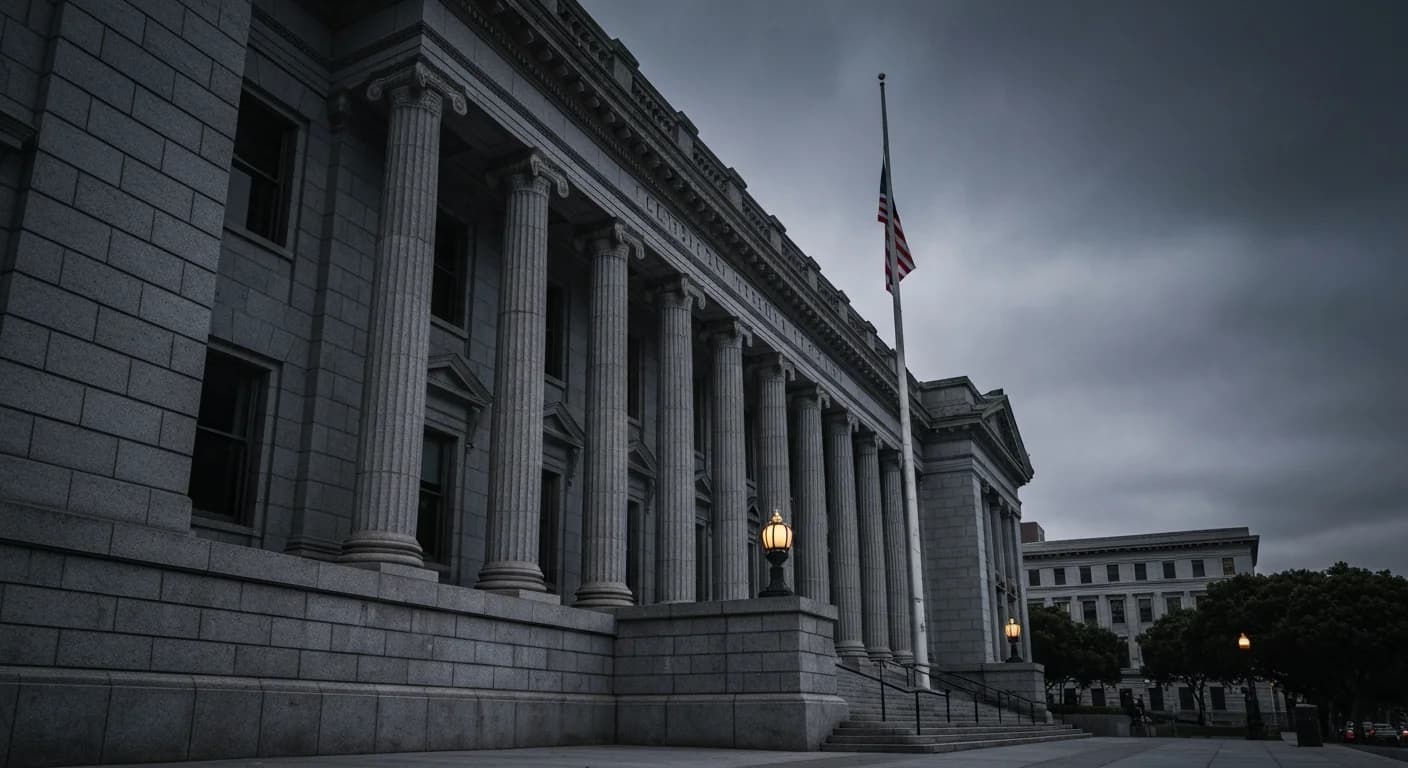
Jury selection in Elon Musk's long-running lawsuit against Sam Altman, Greg Brockman, and OpenAI begins Monday at the U.S. District Court for the Northern District of California in Oakland, kicking off what reporters have dubbed the AI trial of the century. The four-week proceeding will test whether the world's most valuable AI startup reneged on its founding pledge to operate as a nonprofit dedicated to safe artificial intelligence development for humanity.
Musk co-founded OpenAI with Altman in 2015 before departing the board in 2018. He filed suit in 2024, and his attorneys later disclosed in a January court filing that he is seeking up to $134 billion in damages from OpenAI and Microsoft. Musk subsequently launched xAI as a competitor in 2023, which has since merged with SpaceX in a deal that valued the combined entity at $1.25 trillion.
What the Jury Will Decide
U.S. District Judge Yvonne Gonzalez Rogers, who has presided over the case since its early stages, will oversee the proceedings. After Musk dropped his fraud and constructive-fraud counts on Friday in a last-minute streamlining of the case approved by the court, only two claims remain: unjust enrichment and breach of charitable trust. Of the 26 claims Musk originally asserted in his November 2024 amended complaint, the rest have been dismissed or narrowed during pretrial motions. The trial is structured in two phases: nine jurors will hear the liability evidence and issue an advisory verdict, and Gonzalez Rogers — not the jury — will ultimately decide whether Musk proved his case and what remedies, if any, to grant.
The charitable-trust theory is the most novel of the surviving counts. Musk argues that OpenAI's transition toward a capped-profit and now restructured corporate form diverted assets pledged to a charitable mission. Despite dropping the fraud counts on the eve of trial, his attorneys have signaled they will still press for damages of up to $134 billion and structural changes that include restoring OpenAI's nonprofit status and removing Altman and Brockman from leadership.
A Witness List That Reads Like an AI Industry Roster
Musk, Altman, and Brockman are all expected to take the stand, as is Microsoft Chief Executive Satya Nadella, whose company has poured tens of billions of dollars into OpenAI through its commercial partnership. Testimony from those four witnesses alone is likely to surface the closest look the public has gotten at the internal disputes that drove Musk's exit from OpenAI's board and his subsequent decision to build a rival lab.
Why It Matters Beyond the Courtroom
The trial arrives at a moment when OpenAI's corporate structure is already under strain on multiple fronts. Beyond the Musk litigation, the company is navigating questions about its relationship with Microsoft and its plans for a future public listing. A ruling against OpenAI on the charitable-trust theory could force a re-examination of how the company handles assets accumulated during its nonprofit era — potentially affecting any restructuring path forward.
For the broader AI industry, the case is being watched as a precedent for how courts treat nonprofit-to-commercial transitions in a sector where mission statements about safety and the public good have been used to attract talent, donations, and regulatory goodwill. A breach-of-charitable-trust finding, even on a narrow basis, would put every frontier lab's governance documents under fresh scrutiny.
The liability phase is expected to run through mid-May, with a remedies phase reportedly scheduled to begin May 18 if Gonzalez Rogers finds OpenAI liable. Whatever the outcome, appeals are virtually certain — meaning the courtroom drama beginning Monday is likely just the opening chapter of a legal fight that will shape AI corporate governance for years.