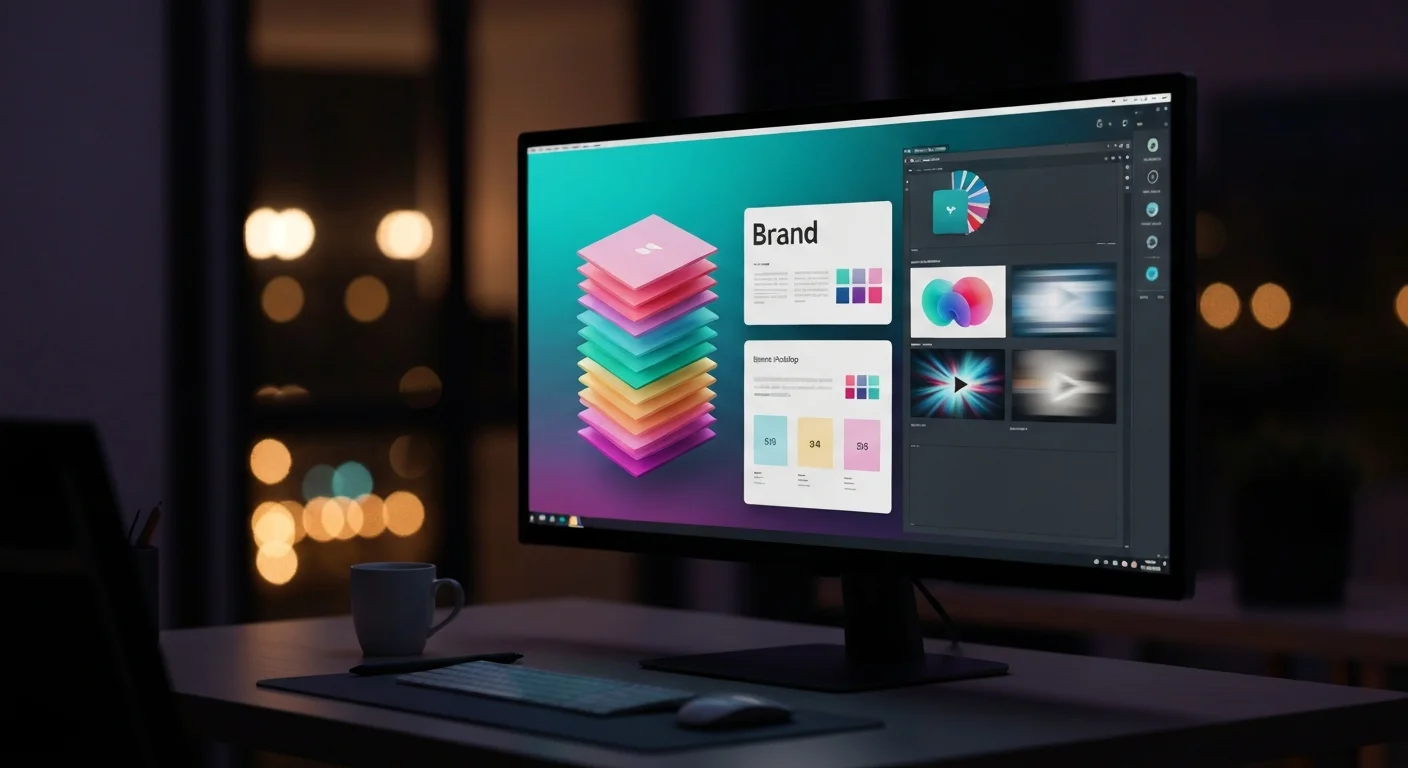
Canva has unveiled Canva AI 2.0, a sweeping platform rebuild that repositions the company from a design tool into an agentic workspace for everyday work. The research preview began rolling out on April 16, 2026 and is being made available first to one million users who discover it on the Canva homepage, with broader access expanding in subsequent weeks.
The company is framing the release as its most significant shift since it first moved design into the browser in 2013. In Canva's own words, "Canva AI 2.0 transforms Canva into a conversational, agentic platform where teams can go from idea to execution in one place."
From design tool to agentic workspace
The new experience centers on four capabilities. Conversational Design generates fully editable layouts from natural-language prompts. Agentic Orchestration lets the assistant coordinate multiple tools to execute multi-step goals such as building a multichannel campaign from a single brief. Object-Based Intelligence allows precise edits to individual elements without regenerating the entire design. Living Memory maintains persistent context, learning a user's style and brand preferences over time.
Canva has also opened the platform outward. New connectors tie the assistant into Slack, Notion, Zoom, Gmail, Google Drive, and Google Calendar, so it can draft briefing documents, sales pitches, and newsletters by pulling from external sources. Additional upgrades include background task scheduling, web research, a Brand Intelligence layer that auto-applies brand assets, Sheets AI, and Canva Code 2.0 with HTML import support.
Proprietary models and cost claims
Powering Canva AI 2.0 are three in-house models. Canva Proteus handles style transfer, Canva Lucid Origin drives image generation, and Canva I2V produces image-to-video output. Canva claims the models are "up to seven times faster and 30 times cheaper than comparable frontier alternatives," with Proteus rated 2x faster and 23x cheaper, Lucid Origin 5x faster and 30x cheaper, and I2V 7x faster and 17x cheaper than unspecified rivals.
Those efficiency numbers are a notable move in a market where creative AI features typically rely on third-party foundation models. By running its own stack, Canva can tune quality for design use cases while controlling unit economics as usage scales.
Why this launch matters
Canva AI 2.0 arrives during an aggressive push from incumbents like Adobe and a growing field of agentic design startups. The shift to conversational, memory-aware agents that can reach across Slack, Gmail, Google Drive, Notion, Zoom, and Google Calendar puts Canva squarely in competition with productivity suites as well as creative tools, widening its surface area inside the enterprise.
For teams, the immediate bet is straightforward: collapse the distance between asking for a campaign, a deck, or a newsletter and shipping the finished artifact. If the proprietary models deliver on the speed and cost claims, Canva is signaling it intends to win the next phase of the AI design race on economics as well as features — and to do it on its own model stack rather than someone else's.