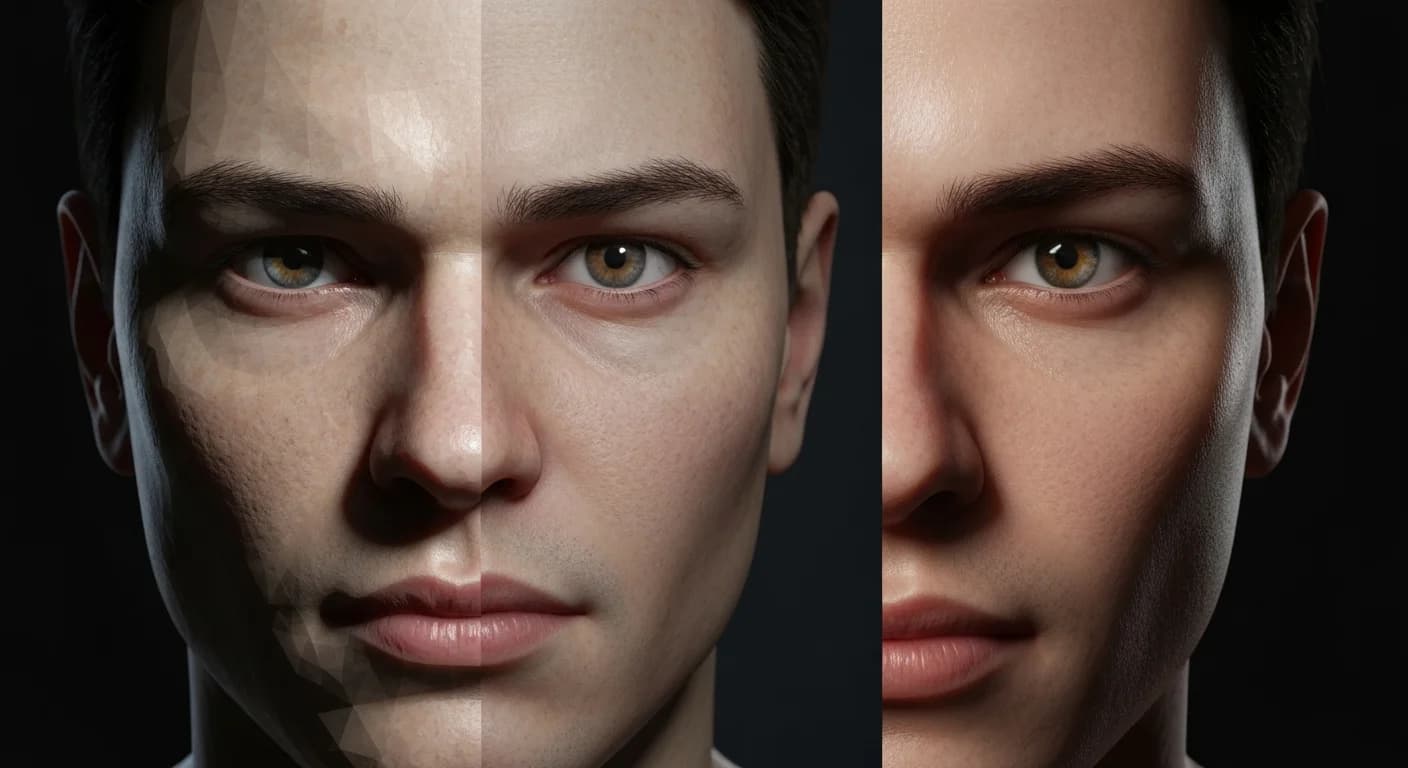
NVIDIA CEO Jensen Huang declared a new era for computer graphics at GTC 2026, unveiling DLSS 5 — a generative AI rendering system that he called "the GPT moment for graphics." The technology, demonstrated live on March 16, augments conventional rendering with neural models trained to understand the semantic content of game scenes.
How DLSS 5 Works
Previous iterations of Deep Learning Super Sampling focused primarily on upscaling lower-resolution images to higher resolutions using AI inference. DLSS 5 takes a fundamentally different approach. It introduces a real-time neural rendering model that infuses every pixel with photoreal lighting and materials by understanding what it is actually looking at.
The AI model has been trained to recognize complex scene elements — characters, hair, fabric, translucent skin — along with environmental lighting conditions. Rather than brute-force computing every ray of light, the system generates visually precise images that handle notoriously difficult rendering challenges such as subsurface scattering on skin, the delicate sheen of fabric, and nuanced light-material interactions on hair.
Crossing the Uncanny Valley
In live demonstrations, NVIDIA showed side-by-side comparisons of traditional rendering versus DLSS 5 output. Industry observers noted that the technology appears to cross the uncanny valley for real-time character rendering, producing faces and skin that look convincingly photographic rather than computer-generated.
The system works by blending handcrafted 3D rendering data with generative AI predictions, allowing game artists to retain creative control while benefiting from AI-enhanced realism. This hybrid approach addresses a common concern among developers that fully AI-generated visuals could undermine artistic intent.
Studio Support and Launch Timeline
DLSS 5 will ship this fall for GeForce GPUs. NVIDIA confirmed that Bethesda, Capcom, Ubisoft, and Warner Bros. Games are among the major studios preparing to integrate the technology at launch. The broad publisher support suggests confidence that the quality improvements will translate to shipping titles, not just tech demos.
"Twenty-five years after NVIDIA invented the programmable shader, we are reinventing computer graphics once again," Huang said during the keynote.
Beyond Gaming
While gaming is the initial target, NVIDIA signaled that the underlying neural rendering technology has applications in film production, architectural visualization, and digital twin simulation. The ability to generate photorealistic imagery in real time at lower computational cost could reshape workflows across creative industries.
What This Means
DLSS 5 represents a strategic shift for NVIDIA, positioning its consumer GPU business as a beneficiary of the same generative AI wave that has driven its data center revenue to record highs. For gamers, it promises a visible leap in visual quality. For the industry, it signals that generative AI is no longer confined to chatbots and code assistants — it is coming for pixels too.