Sam Altman has stepped down from the board of Helion Energy — the nuclear fusion startup he had personally backed — as OpenAI reportedly enters advanced discussions for a power purchase agreement or deep partnership with the company. The development, reported by Axios and confirmed by Altman on social media, represents one of the more unusual strategic moves in AI infrastructure in recent memory.
The Conflict of Interest Question
Altman's decision to leave Helion's board appears designed to address the obvious conflict of interest: he is simultaneously the CEO of OpenAI and a major investor in Helion. His departure from the board, along with a stated recusal from deal discussions, signals that negotiations are serious enough to warrant formal separation.
Altman announced his board exit on X, where he also confirmed that OpenAI and Helion are "exploring a partnership." Axios reported that the talks have reached an advanced stage, though the specific structure — power purchase agreement, joint venture, or other long-term partnership — has not been confirmed publicly.
Why OpenAI Wants Energy
The strategic logic isn't hard to follow. AI model training and inference are extraordinarily energy-intensive, and the explosive growth in demand for AI compute has turned electricity supply into a first-order strategic concern. Data center operators are already scrambling for power, signing deals with natural gas providers, nuclear fission plants, and even coal operators to keep up.
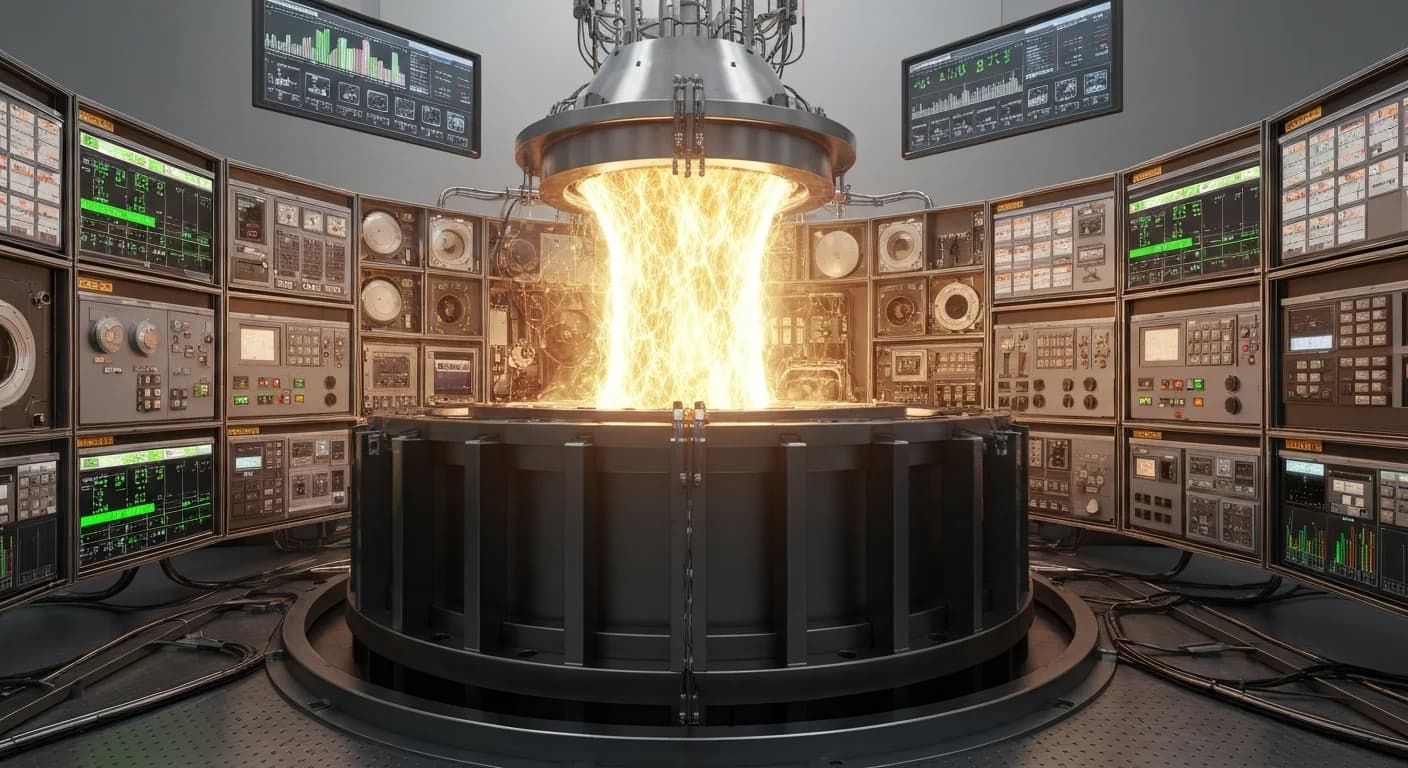
Helion, founded in 2013, has attracted billions in investment on the promise of commercial fusion power — energy produced by fusing hydrogen isotopes rather than splitting heavy atoms. Unlike fission-based nuclear power, fusion produces no long-lived radioactive waste and uses fuel derived from seawater. Microsoft signed a power purchase agreement with Helion in 2023, contingent on Helion achieving commercial viability.
The Science Is Still the Hard Part
The catch is that Helion has not yet demonstrated net energy gain from fusion at the scale required for grid power, and the timeline for commercial viability remains uncertain. Fusion has been "20 years away" for most of the past 70 years, and while recent milestones — including net energy gain demonstrated at the National Ignition Facility — have renewed enthusiasm, commercial fusion power still requires substantial scientific advances.
Securing a long-term power deal with Helion would give OpenAI a long-horizon bet on clean, abundant energy — but it would also mean committing to significant technical and financial uncertainty. Whether that makes sense for a company primarily focused on AI products and infrastructure is a question analysts are already debating.
Bigger Picture: AI and the Energy Race
OpenAI's potential energy deal is the latest sign that the largest AI companies are treating energy as a core competency, not an operational cost. Google, Microsoft, and Amazon have all made substantial energy commitments in recent years, from nuclear fission offtake agreements to grid-scale battery storage.
If Helion ever delivers on its promise, an AI company with captive access to clean fusion power would have a significant and difficult-to-replicate competitive advantage. That's the bet Altman appears to be making — though the timeline for a payoff remains deeply uncertain.